Skip to content


Labubu went from a strange-looking collectible toy to a global sensation almost overnight. Millions of people wanted one. Celebrities showed them off. TikTok users filmed themselves opening mystery boxes. Resellers charged huge markups for rare versions.
Then the excitement started fading.
Labubu’s hype began declining as resale prices fell, supply increased, and consumers started moving on to other trends.
The slowdown eventually affected Pop Mart, the Chinese
toy company behind the collectible dolls.
Pop Mart reported a 45% to 50% drop in overall revenue during the third quarter of 2026 compared with the previous year.
The story of Labubu shows how powerful marketing can create a global obsession. It also shows why businesses cannot depend on hype forever.

What Is Labubu, and Where Did It Come From?
Labubu is a fictional monster created by Hong Kong-born artist Kasing Lung in 2015. The character first appeared in The Monsters, a series of illustrated stories inspired by Nordic mythology.
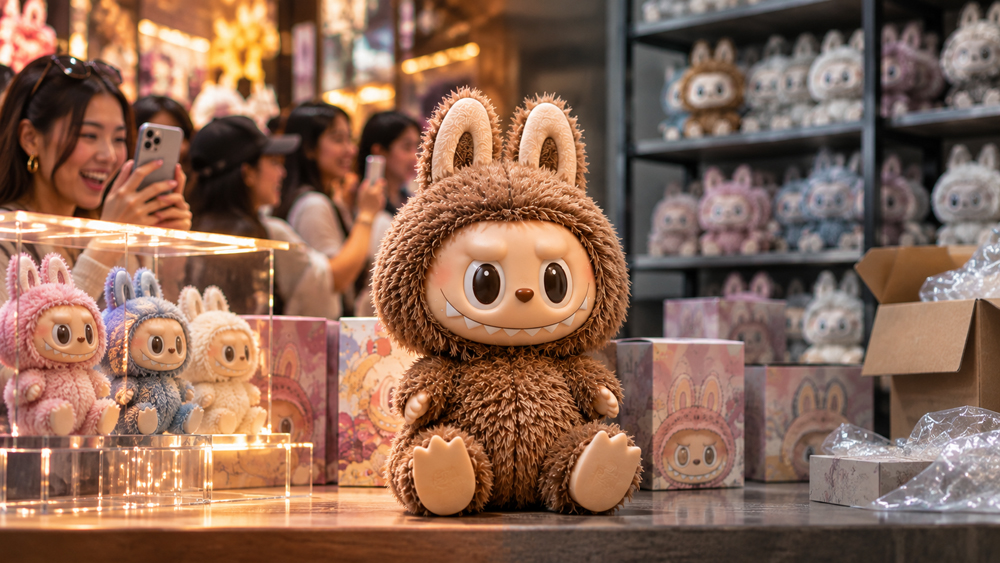
Labubu has pointed ears, a wide grin, and nine sharp teeth. Its unusual appearance helped it stand out from traditional cute toys.
Chinese collectible toy company Pop Mart partnered with Lung in 2019 to sell Labubu figures.
The character gained wider attention when Pop Mart introduced plush versions that could hang from handbags and backpacks in 2023.
Labubu was no longer just a toy. It became a fashion accessory, collectible, and symbol of internet culture.
How Did Labubu Become So Popular?
Labubu’s global popularity exploded in 2024 and 2025 through a combination of celebrity exposure, social media, and limited product availability.
BLACKPINK singer Lisa helped bring Labubu into mainstream fashion when she shared the character with her followers.
Other celebrities, including Rihanna, Dua Lipa, and David Beckham, were also seen with Labubu collectibles.
TikTok and Instagram amplified the trend.
People posted videos opening mystery boxes, showing their collections, and comparing rare versions. Others dressed their Labubu dolls in miniature clothing or attached them to luxury handbags.
Every viral video introduced the character to more potential buyers.
Pop Mart benefited from something businesses spend millions trying to achieve: customers promoting a product without being paid to advertise it.
Labubu became popular because people wanted to participate in a trend they kept seeing everywhere.

The Marketing Strategy Behind Pop Mart's Success
Pop Mart turned Labubu into a major business through three powerful marketing strategies.
Popular Labubu releases are frequently sold out. Limited editions and rare designs became especially valuable to collectors.
Scarcity created urgency. Customers worried that waiting would mean missing their opportunity to purchase a particular character.
That fear of missing out, commonly called FOMO, encouraged people to buy quickly.
Scarcity also made Labubu feel exclusive. Owning a hard-to-find version became part of the appeal.

Pop Mart sells many Labubu collectibles in blind boxes.
A blind box is sealed packaging that hides which character or design is inside until the buyer opens it.
Customers know the collection but cannot choose the exact version.
Someone hoping to collect every character might purchase several boxes. Rare secret editions add another reason to keep buying.
The surprise creates excitement, while the uncertainty encourages repeat purchases.
This business model combines collecting, entertainment, and the thrill of discovery.

Labubu’s marketing worked because its customers created much of the content.
Unboxing videos were easy to film and share. Rare discoveries gave creators something exciting to show their audiences.
Celebrity exposure added credibility and visibility.
Pop Mart also benefited from user-generated content, where ordinary customers promoted the product through their own experiences.
This is one reason social media marketing can be so effective. Customers who genuinely enjoy a product can introduce it to audiences that traditional advertising might never reach.
Each purchase created another opportunity for someone to share Labubu online.

How Much Money Did Pop Mart Make From Labubu?
Labubu helped turn Pop Mart into a multibillion-dollar business.
Pop Mart reported total revenue of approximately 13.04 billion yuan in 2024, more than double the previous year’s revenue.
Its growth continued into 2025 before slowing in 2026.
According to Pop Mart’s August 2026 financial announcement, the company generated 17.17 billion yuan in revenue during the first half of 2026.
The Monsters collection, which includes Labubu, produced approximately 4.45 billion yuan in revenue.
That represented 26% of Pop Mart’s total revenue, down from 34.7% during the same period in 2025.
Labubu remained an important product, but its share of the company’s business was shrinking.

Why Is Labubu's Popularity Declining?
Labubu’s decline did not happen for one simple reason.
Several changes weakened the excitement that originally made the toys so popular.
Increased supply reduced scarcity. Pop Mart expanded production to meet customer demand. More available products made certain Labubu collectibles easier to purchase.
Resale prices started falling. Reuters reported in October 2025 that a Labubu figure called Luck had fallen from more than 500 yuan at its June resale peak to around 108 yuan.
The novelty began wearing off. Labubu faced the same challenge as other viral products. Consumers had already seen the toys everywhere, and the excitement of discovering something new became harder to maintain.
Business performance weakened. Pop Mart’s October 2026 announcement showed that third-quarter revenue fell 45% to 50% year over year. Revenue in the Americas declined 70% to 75%.
Lower resale prices alone do not prove that customers stopped wanting Labubu. Greater supply can also push prices down.
The company’s more recent revenue decline, however, provides stronger evidence that the broader business has experienced a serious slowdown.
Is Labubu Still Popular in 2026?
Yes. Labubu still has collectors, recognizable designs, and an established international audience.
The difference is that Labubu is no longer experiencing the same explosive growth that defined its peak.
Pop Mart also has other collectible brands, including Crybaby, Skullpanda, Dimoo, and Twinkle Twinkle.
These characters give the company opportunities to grow beyond Labubu.
The challenge is turning short-term interest into lasting customer loyalty.
A successful collectible brand needs more than limited releases and viral videos. It needs characters, stories, products, and experiences that customers continue enjoying after the trend fades.


What Can Corpus Christi Business Owners Learn From Labubu?
Labubu’s decline did not happen for one simple reason.
Several changes weakened the excitement that originally made the toys so popular.
- Increased supply reduced scarcity. Pop Mart expanded production to meet customer demand. More available products made certain Labubu collectibles easier to purchase.
- Resale prices started falling. Reuters reported in October 2025 that a Labubu figure called Luck had fallen from more than 500 yuan at its June resale peak to around 108 yuan.
- The novelty began wearing off. Labubu faced the same challenge as other viral products. Consumers had already seen the toys everywhere, and the excitement of discovering something new became harder to maintain.
- Business performance weakened. Pop Mart’s October 2026 announcement showed that third-quarter revenue fell 45% to 50% year over year. Revenue in the Americas declined 70% to 75%.
Lower resale prices alone do not prove that customers stopped wanting Labubu. Greater supply can also push prices down.
The company’s more recent revenue decline, however, provides stronger evidence that the broader business has experienced a serious slowdown.


The Real Lesson Behind Labubu's Rise and Fall
Labubu proved that a distinctive product, strong distribution, and social media attention can create extraordinary demand.
Its slowdown revealed the risks of relying too heavily on viral popularity.
Pop Mart now faces a different challenge: building a lasting business around characters that people continue to value.
The goal of marketing should never be popularity alone. It should be turning attention into trust, purchases, and long-term customer relationships.
That lesson matters as much for a small business in Corpus Christi as it does for a global company like Pop Mart.